:format(webp))
:format(webp))
Beyond Simple Triggers: Running Your Business on Autonomous AI Agents
You are likely familiar with software that follows a strict "if this, then that" logic. While helpful, traditional automation often breaks when faced with the unpredictability of daily business. By reading this, you will understand how to transition from rigid scripts to autonomous AI agents that reason, remember, and refine your internal operations. This shift allows you to scale your output without simply adding more names to the payroll, especially as Gartner identifies agentic AI as a top strategic technology trend for 2025 that will redefine how enterprises manage complex workflows.
Shifting from Robotic Process Automation to Agentic Reasoning
Traditional Robotic Process Automation (RPA) excels at repetitive, structured tasks like moving data from a spreadsheet to a form. However, RPA lacks the ability to handle nuance or unexpected changes. AI agents represent a leap forward because they are goal-oriented rather than trigger-based. Instead of following a step-by-step recipe, you provide an agent with an objective, and it determines the best path to achieve it. Research highlights that these agents use reasoning and planning to navigate legacy systems that previously required human intervention, effectively bridging the gap between static software and dynamic decision-making.
Feature | Traditional RPA | Agentic AI |
|---|---|---|
Logic | 'If this, then that' (Rigid) | Goal-oriented reasoning (Flexible) |
Problem Solving | Fails on unexpected variables | Adapts and finds new paths |
Scope | Structured data only | Can navigate unstructured nuance |
Setup | Step-by-step scripts | Objective-based instructions |
The Power of Task Decomposition
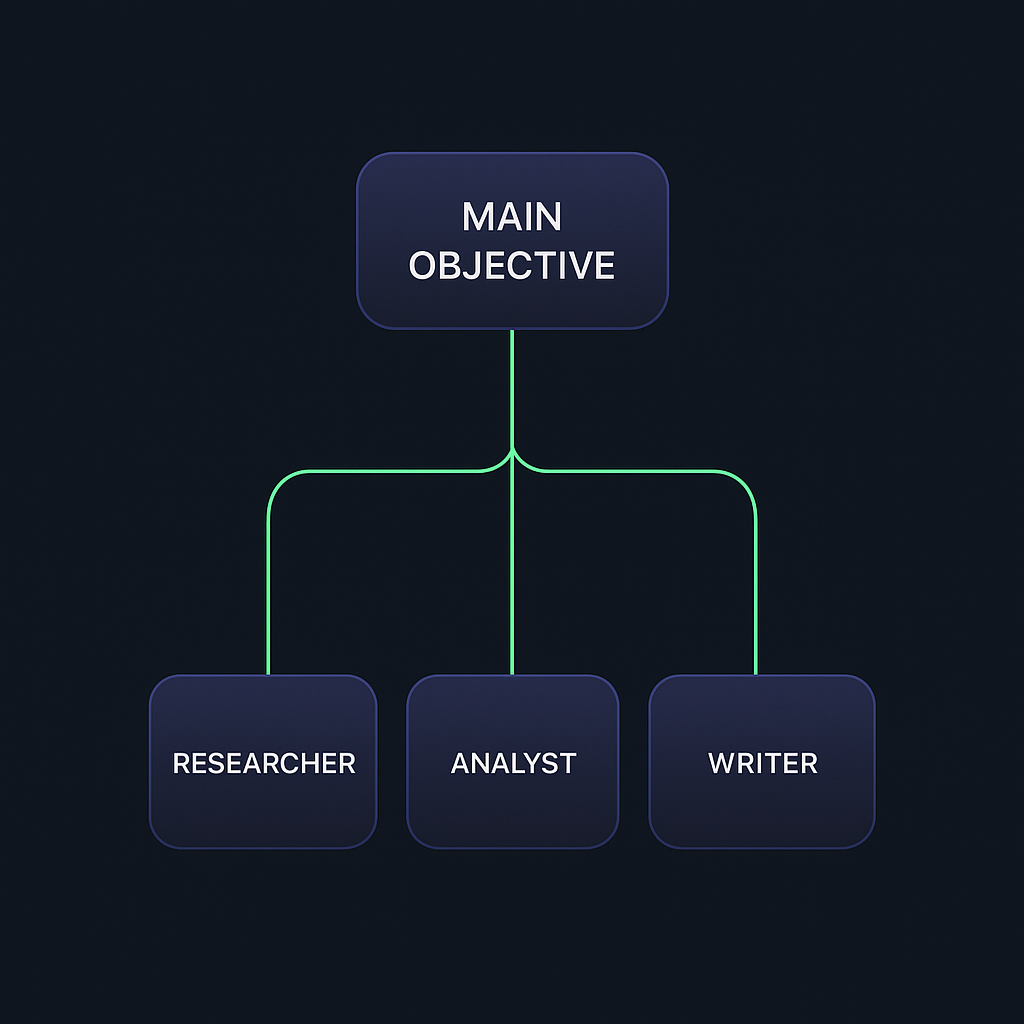
When you give an AI agent a complex project, it doesn't just stare at a blank screen. It breaks the objective into smaller, manageable sub-tasks. This process, known as task decomposition, ensures that every component of a project—from data gathering to final drafting—is handled in a logical sequence. Microsoft Research indicates that multi-agent frameworks enable LLMs to solve complex problems by assigning specific roles to different agents, allowing for a collaborative approach to problem-solving that mimics a high-functioning human team.
The Cognitive Edge: Memory and Reflection
One of the most significant upgrades agents bring to your workflow is their ability to learn from the past. Unlike basic bots that reset after every execution, advanced agents utilize short-term and long-term memory mechanisms. Advanced AI agents utilize architectural patterns that allow them to store interactions and context, making them increasingly effective as they become familiar with your specific business requirements and historical preferences.
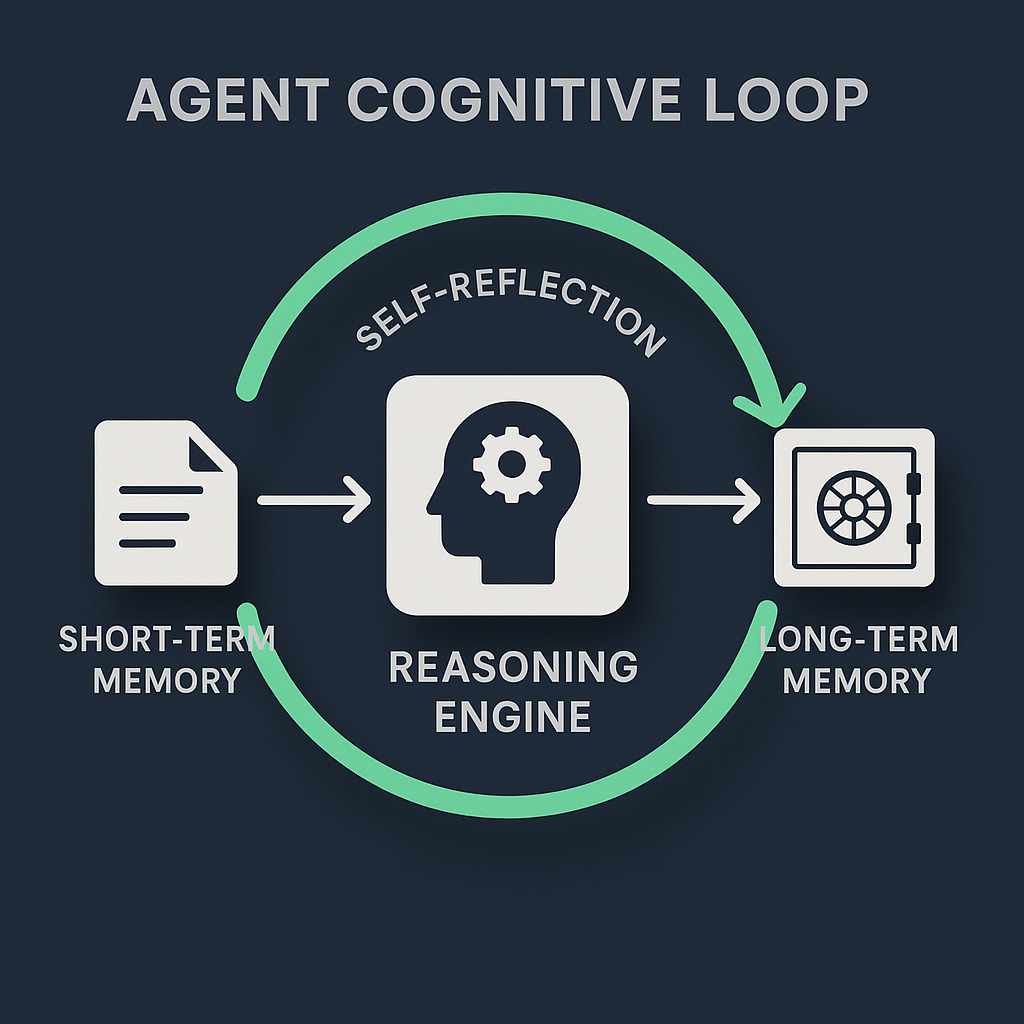
Short-term memory: Stores immediate context from a current conversation or task.
Long-term memory: Retains historical data and past preferences to inform future decisions.
Self-Reflection: Agents analyze their own previous actions to identify errors and improve their logic for the next run.
Adaptive Learning in Dynamic Workflows
If an agent encounters a roadblock, it doesn't just stop. Through a process of reflection, it evaluates why a specific approach failed and adjusts its strategy. This self-correction loop reduces the manual oversight you have to provide, as the system effectively trains itself to be more efficient over time, moving from simple execution to continuous optimization.
Revolutionizing Back-Office Operations
Your internal departments—HR, Finance, and IT—often suffer from administrative bottlenecks. AI agents can act as a tireless support layer for these teams. For example, in HR, agents can manage the entire employee onboarding sequence, from generating documentation to setting up software permissions. In finance, they can perform real-time auditing of expense reports, flagging discrepancies that a human might miss. McKinsey & Company estimates that generative AI could add the equivalent of trillions of dollars in value to the global economy by automating these complex cognitive tasks and improving labor productivity across the board.
These agents are moving beyond simple data entry to provide intelligent oversight in supply chain logistics and inventory tracking.
"AI agents are not just tools; they are becoming digital colleagues that can handle the cognitive load of routine decision-making." - Andrew Ng, AI expert and founder of DeepLearning.AI. DeepLearning.AI highlights that agentic workflows often yield significantly better results than traditional large language model prompting by allowing the AI to iterate on its own work.
Predictive Maintenance and Environmental Awareness
In specialized sectors like manufacturing, agents are taking on even more complex roles by integrating with IoT (Internet of Things) data. These agents monitor equipment health in real-time to predict failures before they happen. They don't just look at internal sensors; they also factor in external variables like weather patterns or supply chain delays to optimize production timelines.
Proactive Procurement: Agents order replacement parts automatically when they predict a machine component is nearing the end of its life.
Context Awareness: The system adjusts production speed based on real-time energy costs or ambient temperature changes in the factory.
Risk Mitigation: Predictive maintenance can reduce maintenance costs by 25% and decrease breakdowns by 70%, proving that agentic oversight has tangible impacts on the bottom line.
Metric | Impact Value |
|---|---|
Maintenance Cost Reduction | 25% Decrease |
Equipment Breakdowns | 70% Decrease |
Strategic Focus | High (Human teams freed from routine monitoring) |
Integrating Multi-Agent Systems into Your Tech Stack
The true potential of this technology is realized when multiple agents work together. You can have one agent focused on market research, another on content drafting, and a third on compliance monitoring. These agents can communicate with each other, passing data back and forth to complete cross-departmental projects. This collaborative environment ensures that information does not stay trapped in silos and that every department benefits from shared intelligence.
By using Retrieval-Augmented Generation (RAG), agents can tap into your internal knowledge base to answer complex queries with high accuracy. Amazon Web Services explains that Retrieval-Augmented Generation provides language models with access to specific, up-to-date business data, which reduces the likelihood of "hallucinations" and ensures that the agent's output is grounded in your company's actual records. This means your IT service desk can resolve tickets by searching through years of documentation in seconds, providing employees with instant, relevant solutions.
Architecture for a Self-Evolving Business
Building a business that runs on AI agents means creating a system that grows smarter every day. By delegating repetitive data entry, customer support triage, and complex scheduling to autonomous units, you free your human staff to focus on high-level strategy. These digital agents provide a foundation of context-aware, predictive, and reflective intelligence that traditional software simply cannot match. As you integrate these tools into your existing SaaS stack, you aren't just automating—you are building an organization that can reason and adapt in real-time.
Want support for Custom AI Agents?
See our custom AI agent offering and reach out.
Custom AI Agent Development:format(webp))
:format(webp))
:format(webp))