:format(webp))
:format(webp))
Beyond the Chatbox: Constructing a Sovereign Intelligence with Custom AI Agents
You likely use public AI tools for quick drafts or basic research. However, these generic models often fail when they encounter the specific logic of your internal workflows or the nuances of your industry data. As the economic potential of generative AI continues to expand across global industries, understanding how to transition from a renter of generic intelligence to an owner of custom agents that act as a proprietary competitive shield is becoming a critical business imperative.
Defining the Autonomy Spectrum
Most conversations around AI focus on a binary choice: you either use a chatbot or you don't. In reality, custom AI agents exist on a spectrum of autonomy. On one end, you have reactive agents that respond only when prompted, similar to a standard customer support bot. On the other end, proactive AI agents can monitor environments, identify problems without human input, and execute multi-step solutions. This spectrum allows businesses to graduate from simple automation to complex, reasoning-based workflows that evolve alongside their operational needs.
Category | Reactive Agent | Proactive Agent |
|---|---|---|
Trigger | Human-initiated | Event-driven |
Logic | Rule-based | Context-aware reasoning |
Action | Responding to queries | Autonomous problem solving |
Reactive vs. Proactive Entities
Generic tools are almost always reactive. They require a human to initiate every action. A custom agent, however, can be designed to sense changes in your database—such as a sudden drop in inventory—and autonomously contact suppliers or adjust pricing.
Breaking Free from the Subscription Trap
While off-the-shelf AI solutions offer low entry costs, they often lead to a long-term financial drain. Subscription fees for "per-user" enterprise tiers can compound quickly as your team grows. More importantly, these tools often charge based on token usage, which becomes expensive as your data processing requirements scale.
Investing in custom development allows you to own the underlying architecture. Over a three-to-five-year period, the return on investment for a custom system often surpasses generic tools because you eliminate recurring "innovation taxes" paid to third-party vendors.
Multi-Agent Orchestration: Your New Digital Workforce
A single AI model often struggles with multi-faceted projects. Custom systems solve this by using multi-agent orchestration. This involves deploying several specialized agents—each an expert in one specific area—that communicate with each other to complete a goal.
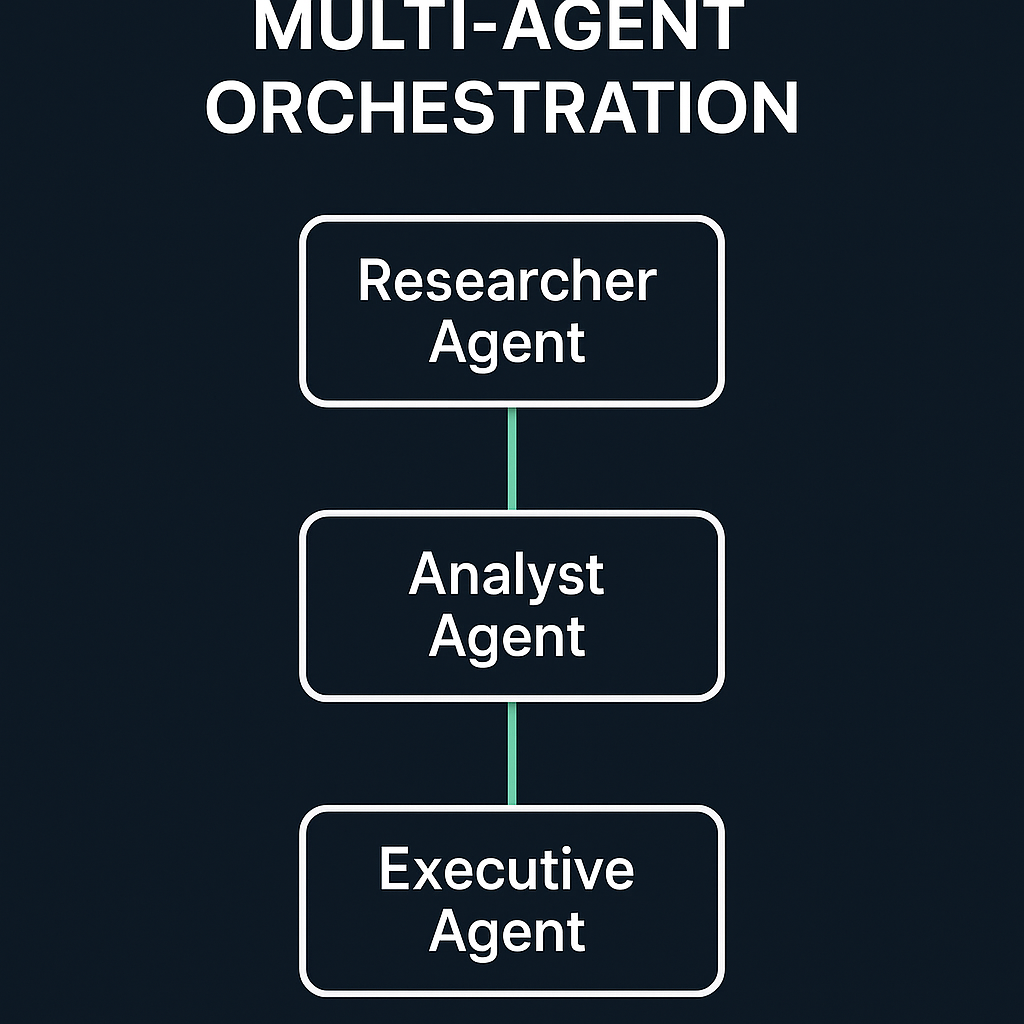
The Researcher Agent: Scrapes and verifies data.
The Analyst Agent: Identifies patterns and anomalies.
The Executive Agent: Summarizes findings and triggers a business action.
Microsoft Research notes that multi-agent orchestration enables more complex problem-solving by delegating specialized roles within a collaborative framework. This approach allows for a level of precision and oversight that is rarely possible with standard, one-size-fits-all tools.
Fine-Tuning as a Defensible Competitive Moat
Generic AI models are trained on the public internet, meaning your competitors have access to the exact same intelligence. When you fine-tune a custom agent on your proprietary data, you create a "moat." This agent understands your unique terminology, historical client interactions, and specific edge cases that no public model can replicate.
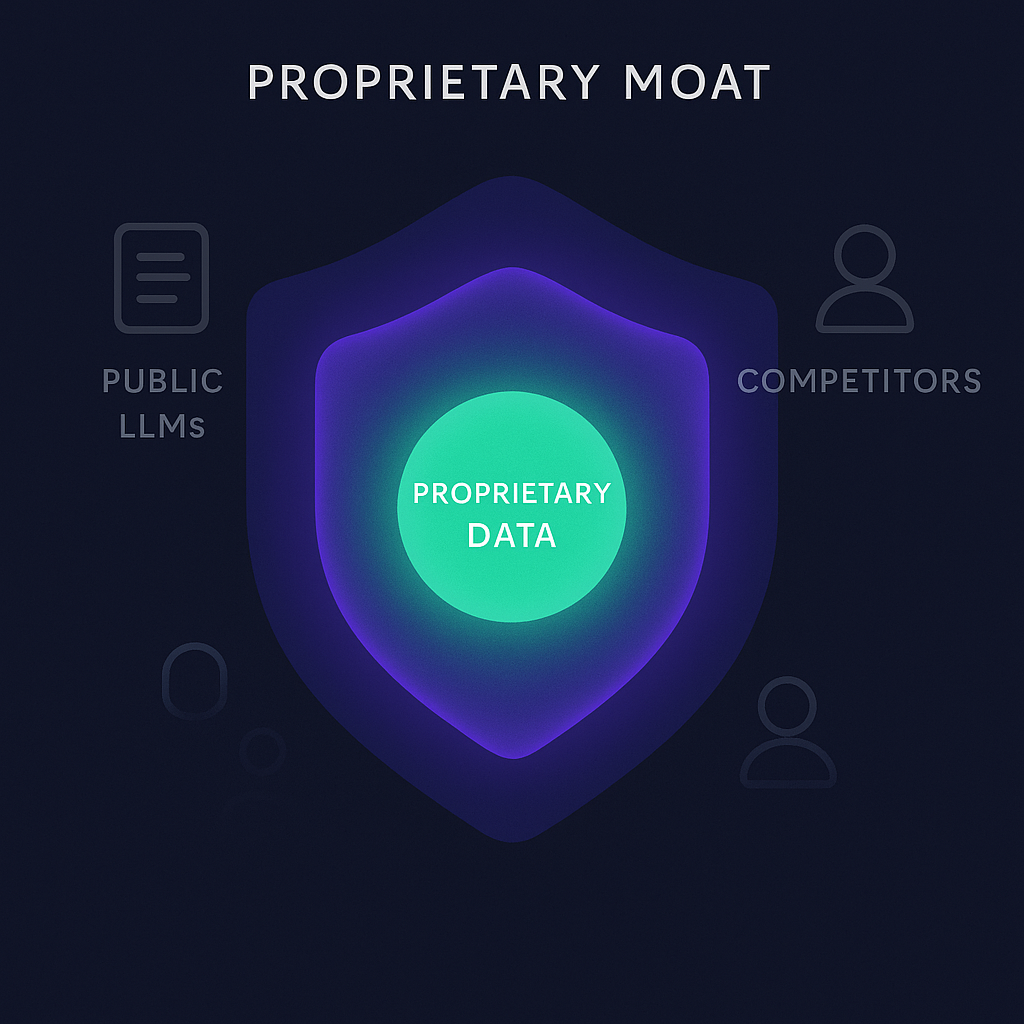
Proprietary data moats are essential for maintaining a competitive advantage in the age of generative models. This specialized training ensures that the AI's outputs are perfectly aligned with your brand voice and technical requirements. As the model learns from your specific business successes and failures, it becomes a specialized asset that is impossible for a competitor to buy off a shelf.
Merging Generative Flair with Agentic Planning
Modern custom systems use a hybrid architecture. They combine generative AI, which excels at creating content, with agentic frameworks designed for execution and logic. While a generic tool might write a great email, a hybrid custom agent using reasoning-based agentic workflows will perform significantly more complex tasks:
Analyze a customer's past purchase history to predict future needs.
Check real-time shipping logs for potential logistical delays.
Generate a personalized apology and a discount code tailored to the client's value.
Update the CRM automatically to reflect the interaction.
This goes beyond simple text generation; it is the execution of a business process. This power is evident in specialized use cases, such as CO₂ compliance, where agents autonomously monitor environmental data and adjust industrial strategies to remain within legal limits.
Navigating the Cold Start and Compliance Hurdles
You should be prepared for the "cold start" problem. Initially, a custom agent might seem less capable than a generic model because it lacks the massive, generalized dataset of a tool like GPT-4. However, this is temporary. Once your agent reaches a critical mass of domain-specific data, its accuracy in your specific field will surpass any general tool.
Furthermore, custom agents are essential for regulated industries. In finance or healthcare, data leakage is a massive risk. Generic tools often use user prompts to train future models, which can violate privacy laws. A custom agent provides:
Pillar | Strategic Value |
|---|---|
Audit Trails | Granular logging of every decision for regulatory review |
Data Sovereignty | Ensuring sensitive information never leaves the secure cloud |
Embedded Governance | Hard-coded legal constraints within the agent logic |
Audit Trails: Every decision the AI makes is logged for regulatory review.
Data Sovereignty: Your information never leaves your secure cloud environment.
Embedded Governance: Compliance rules are hard-coded into the agent’s decision-making logic to ensure adherence to legal standards.
Claiming Your Algorithmic Sovereignty
The shift from generic to custom AI represents a move toward business independence. By building your own agents, you ensure that your most sensitive data remains private and that your operational logic remains a secret. You are no longer just a user of someone else’s technology; you are the architect of your own intelligent infrastructure.
Gartner forecasts that by 2026, over 80% of enterprises will have deployed generative AI-enabled applications or used APIs in production environments. As you move forward, focus on creating specialized entities that don't just talk about work but actually perform it, turning AI from a conversational novelty into a fundamental pillar of your business operations.
Want support for Custom AI Agents?
See our custom AI agent offering and reach out on demand.
Custom AI Agent Development:format(webp))
:format(webp))
:format(webp))