:format(webp))
:format(webp))
React State Management in 2025: Your Complete Guide
When you finish reading this, you’ll understand the built-in hooks, core libraries, emerging patterns for server and concurrent apps, plus advanced tactics to keep your React state fast and maintainable.
Built-In Hooks: useState and useReducer
React ships with two primary hooks for local state:
useState for simple, component-scoped values. It reads clearly and updates quickly. Learn more in the official React documentation on useState .
useReducer for more structured updates or when state logic grows. A comprehensive guide to using useReducer in React applications covers forms, wizards, resets, and undo/redo flows.
`useState` is great when you have a few independent values. `useReducer` shines if you need to handle multiple state transitions in one place—forms, wizards, or juggling related flags—let alone easier testing of state transitions via pure reducer functions.
When to Prefer useReducer
Complex state transitions (multiple fields, resets, undo/redo)
Shared update logic across events
Easier testing of state transitions via pure reducer functions
Feature | useState | useReducer |
|---|---|---|
Scope | Component-scoped simple value | Complex state logic |
Ideal Use-case | Independent values | Multiple related state transitions |
Complexity Handling | Low | High |
Testability | Built-in update functions | Pure reducer functions |
Context API for Shared State
The Context API lets you share a value (theme, auth, locale) down the tree without prop drilling, making it ideal for low-frequency updates. However, too many nested providers can slow renders; Kent C. Dodds explains best practices for using React Context effectively . Keep each provider’s scope narrow or wrap consumers in `React.memo`.
A Note on Provider Nesting
If you find yourself stacking more than five context providers, consider splitting domains or switching to a global store like Zustand to avoid extra renders.
Redux: The Classic Choice for Complex State
Redux offers a predictable, centralized store and strict update rules. The Redux Toolkit (RTK) now reduces boilerplate and includes best practices out of the box.
Centralized store makes it easy to inspect and replay state
Middleware ecosystem for side effects (thunks, sagas)
Strong TypeScript support
Get started with the Redux Toolkit official documentation .
Alternatives to Redux
When you want Redux-like capabilities without its ceremony, these libraries shine:
Zustand: Tiny, unopinionated store with hooks.
Jotai: Atomic state library where each atom is independent, so only subscribed components update.
Recoil: Facebook’s atomic approach with derived selectors and fine-grained subscriptions. Don't use it as it's discontinued. It's only mentioned here for completeness.
MobX: Observable state and reactions—automatically tracks dependencies.
XState: State machines and statecharts for explicit, testable flows.
Library | Size | Update Model | Best Use-case |
|---|---|---|---|
Zustand | small | hook-based | simple global state |
Jotai | small | atomic | fine-grained updates |
Recoil | medium | atomic+selectors | complex derived state |
MobX | medium | observable/reactive | OOP style state |
XState | large | state machines | explicit state charts |
Atomic State Libraries in Action
Atomic libraries like Jotai and Recoil (which is discontinued) let you break your state into minimal units (atoms). This limits re-renders only to components that use a given atom, leading to optimal performance in complex UIs.
Server-Side and Universal State Patterns
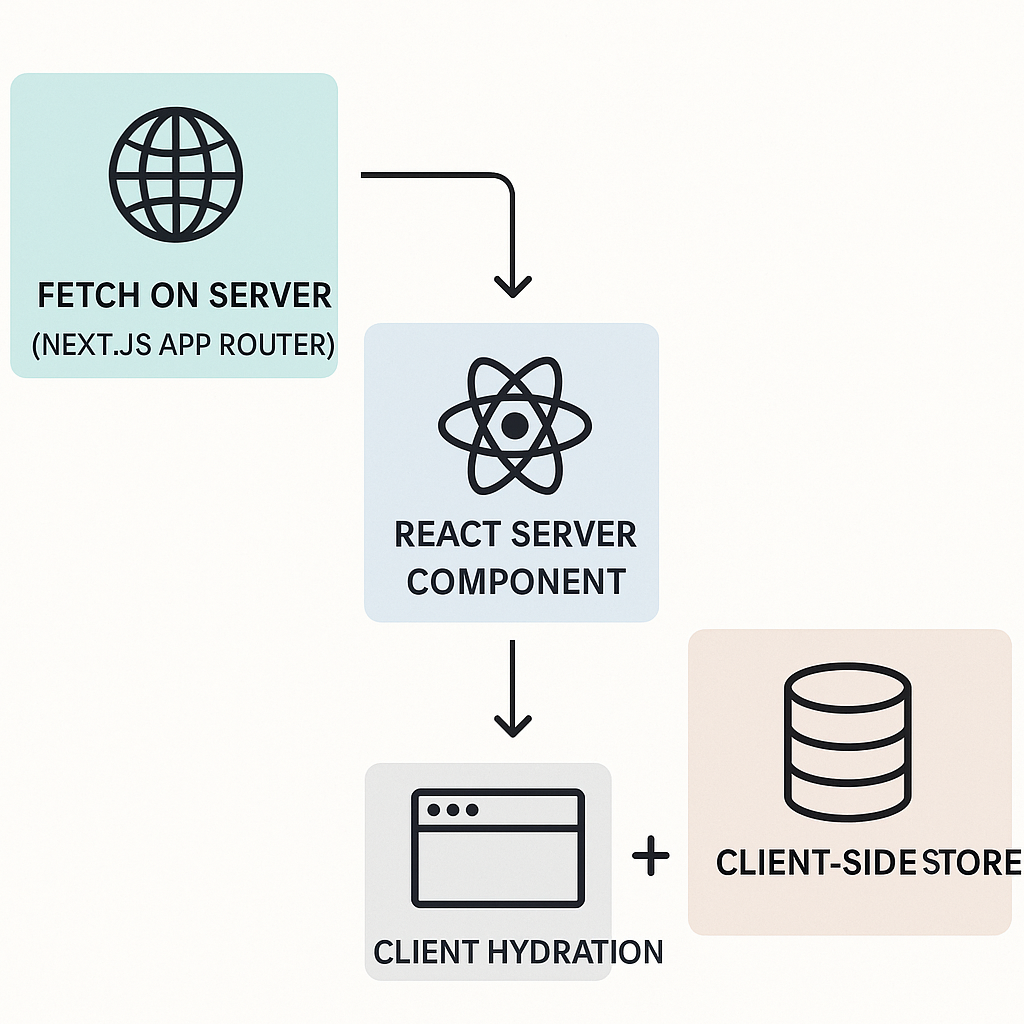
With React Server Components and frameworks like Next.js or Remix, you can fetch and hydrate state on the server:
Use the Next.js App Router data fetching to load data before render
Leverage React Server Components for read-only data on the server
Combine client-side stores (Zustand/Jotai) for interactivity after hydration
These patterns let you decide: server for heavy queries, client for UI state and interactions.
Concurrent Rendering and State
Concurrent Mode (now just “concurrent features”) brings `startTransition` and interruptible renders. A great introduction to interruptible React is available on web.dev . Your state library should:
Batch updates to avoid tearing
Expose transitions (`useTransition`) for non-urgent state
Handle race conditions in async flows
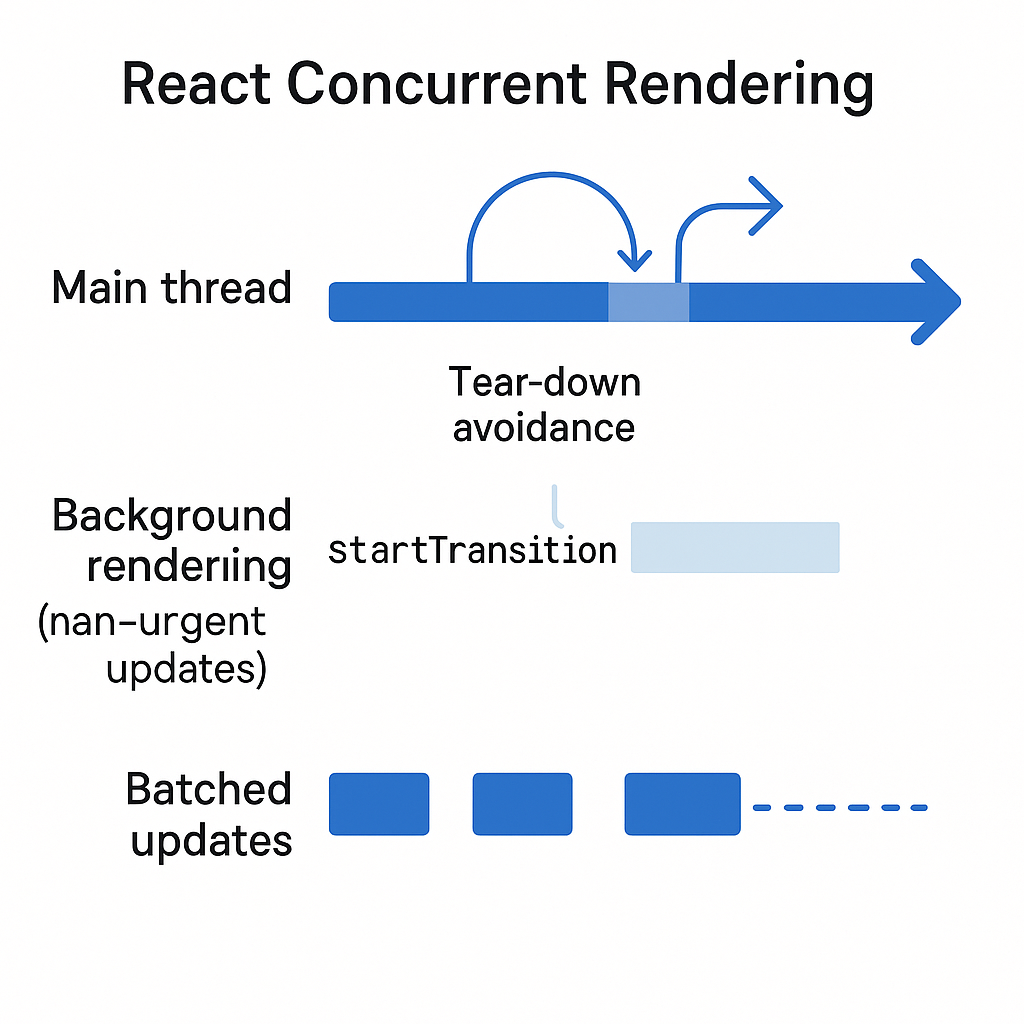
XState’s formal transitions and atomic libraries’ scoped updates work well here.
State in Micro-Frontend Architectures
When you break your app into independently deployed frontends:
Isolated stores keep each micro-frontend self-contained
Shared stores (e.g., a global Zustand instance) let apps talk but risk tight coupling
Decide by team boundary: if teams align on release cycles, a shared store can ease cross-app shared state. Otherwise, isolate.
Server state
Any data that is always fetched from the backend can be called Server State. For server state that needs to be refreshed (i.e. it can't just be loaded once on load using server components) you should consider using Tanstack Query or similar libraries. Tanstack query contains its own global state management and reduces unnecessary fetches to your server if the data was already fetched.
Profiling, Monitoring, and Tooling
Measure to optimize with these tools:
React DevTools Profiler: visualizes renders and commit durations—learn how to use the React DevTools Profiler in this Dev.to tutorial .
why-did-you-render: warns you about avoidable re-renders; see the why-did-you-render npm package .
Sentry React: tracks exceptions and performance in production—explore Sentry for React .
Using these helps you choose the right strategy and spot bottlenecks early.
Advanced Strategies: Lazy-Loading, Colocation, Custom Hooks
Lazy-load state values with dynamic `import()` to shrink your initial bundle; see MDN’s guide on dynamic `import()` .
Colocate state next to related components—FreeCodeCamp outlines how to colocate state and effects for maintainable logic.
Custom hooks wrap reusable logic (`useForm`, `useCart`) so you avoid copy-pasting stateful code—read the LogRocket blog’s guide to custom React hooks .
Charting Your Course
You’ve seen built-ins, battle-tested libraries, server and concurrent considerations, micro-frontend tactics, and tools for measurement. Now:
Map your state domains (local vs global vs server)
Pick a minimal solution first (useState, Context)
Introduce a store or atomic library as complexity grows
Profile early—catch re-renders and bundle bloat
Refine with lazy-loading, colocation, and custom hooks
With these patterns, your React apps will stay fast, predictable, and maintainable in 2025.
:format(webp))
:format(webp))
:format(webp))