:format(webp))
:format(webp))
Why some developers are rethinking React in 2025 — and what that really means for your projects
Read this and you’ll get a clear picture of why React is under scrutiny right now, which critiques are technical vs. cultural, where lightweight frameworks are making headway, and a few less-covered angles (AI, career-stage friction, and ecosystem fragmentation) that help explain the debate. Links show where each claim comes from so you can follow up.
A quick history: how React became the default
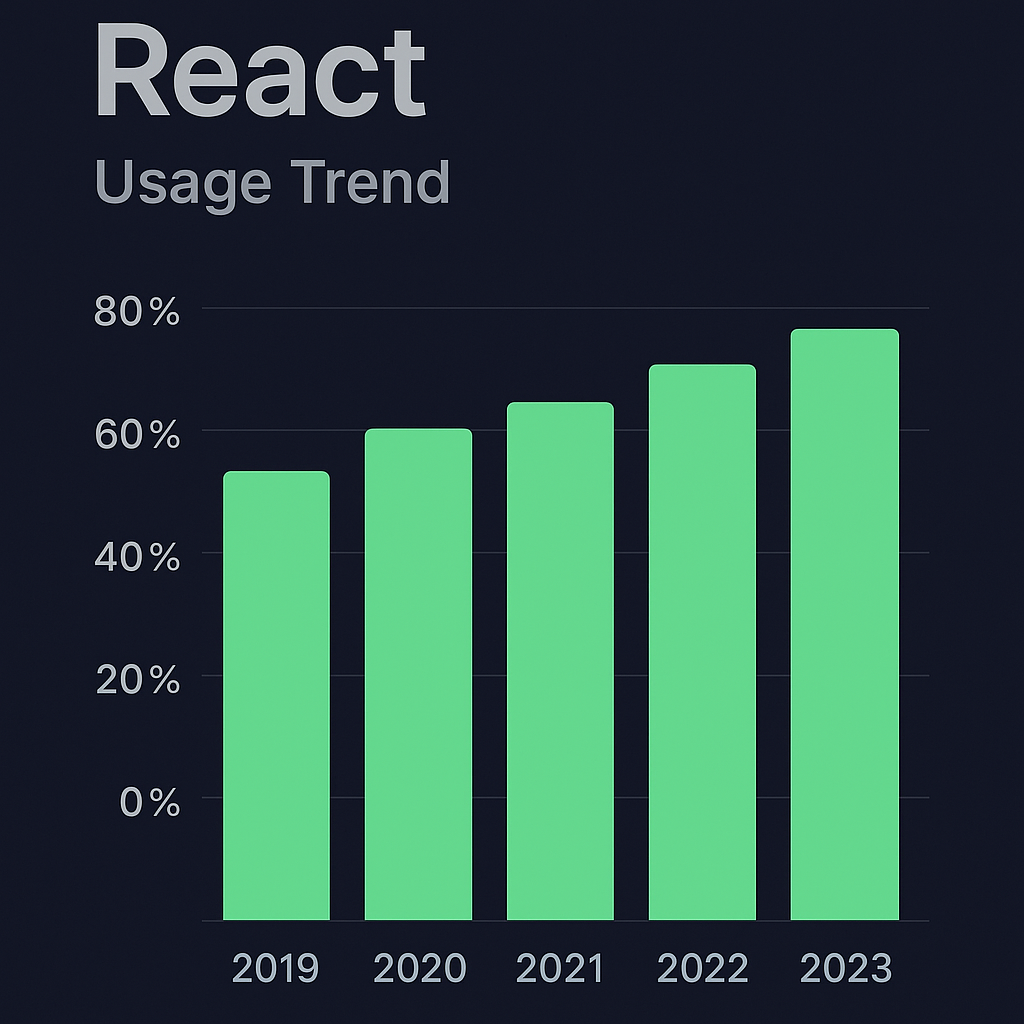
React changed frontend development when it introduced component-driven UI, a virtual DOM, and a strong ecosystem. That momentum is visible in repeated developer surveys and usage trackers that list React as the most-used front-end framework for years running (https://2023.stateofjs.com/en-US/technologies/front-end-frameworks/). React’s position is also reinforced by its sustained investment from Meta and a sprawling ecosystem of libraries and meta-frameworks such as Next.js (https://nextjs.org/).
The core complaints you’ll keep hearing
Developers’ gripes cluster into technical and non-technical categories. Many of the technical concerns are well documented.
Bundle size and perceived “bloat.” Larger bundles and runtime overhead matter for performance-sensitive apps and low-bandwidth users; critics point to smaller runtime footprints in some newer frameworks (https://github.com/krausest/js-framework-benchmark).
Complexity and churn. New APIs (hooks, concurrent features, server components) and frequent ecosystem changes raise the learning curve and maintenance work (https://reactjs.org/).
Server Components and hydration debates. React Server Components (RSC) introduced new server/client boundaries that have produced active debate about DX and build complexity (https://react.dev/learn/react-server-components).
State management fragmentation. There isn’t a single canonical state solution; teams choose among Context, Redux, Recoil, Zustand, etc., which creates decision overhead and inconsistency across codebases.
Those problems are covered in depth in several recent analyses and opinion pieces summarizing the community mood and technical trade-offs.
Lightweight challengers and benchmark reality
Svelte, Solid.js, and similar frameworks highlight lower runtime cost, simpler mental models, and smaller output bundles. Benchmarks repeatedly show that in many DOM-heavy microbenchmarks these frameworks can outperform React on raw metrics like initial render time and update throughput.
Framework | Initial Render Time (ms) | Bundle Size (KB) | Update Throughput (ops/sec) |
|---|---|---|---|
React | 50 | 120 | 500 |
Svelte | 30 | 80 | 800 |
Solid.js | 25 | 70 | 900 |
That said, benchmarks don’t tell the whole story: ecosystems, libraries, and long-term maintainability matter as much as single-page microbenchmarks. Many teams still prefer React’s mature tooling and hiring pool, especially for large, complex products.
Meta-frameworks and fragmentation: why “React” no longer means a single thing
React’s ecosystem now includes many meta-frameworks (Next.js, Remix, Astro, etc.) that wrap or extend React for full-stack use. That’s useful, but it also fragments what “React development” looks like from project to project. You might be working in:
plain React (CRA or Vite)
Next.js with heavy server-first patterns
Remix with its routing/data-loading model
islands frameworks or hybrid approaches
This explosion of paths produces decision paralysis for teams and contributes to a perception that React itself lacks a single identity. Vercel’s Next.js is a prominent example of a meta-framework that changes the default React experience for many teams.
The governance and vendor-consolidation worry
React’s stewardship by Meta, and the tight commercial relationship between Vercel and Next.js, raise broader questions about who steers roadmaps and how much vendor priorities influence developer choices. Concerns about vendor lock-in extend beyond a single provider: teams worry about coupling to particular hosting platforms, build systems, or paid features that shape framework direction. Critical discussions of these trade-offs appear in community and industry analysis of 2025 tensions.
A less-covered angle: AI’s paradoxical effect on React’s longevity
Here’s a counterintuitive point most coverage hasn’t emphasized: large language models (LLMs) and code models often generate higher-quality code for frameworks that dominate training data. Because React has a massive corpus of public examples, AI-assisted tools can often produce usable React components and patterns more reliably than for newer, rarer frameworks. The original Codex research and subsequent analyses show LLMs perform well on code tasks when they have abundant training examples.
That creates a paradox: even if experienced developers are skeptical about React’s complexity, AI can function as a productivity amplifier for React work—helping junior devs scaffold pages, generate components, or refactor common patterns. This dynamic may sustain React adoption in many teams because it lowers the marginal cost of building certain UI pieces.
People problems: fatigue, mid-career satisfaction, and skill anxiety
Technical trade-offs matter, but social factors explain a lot of the mood against React.
Framework fatigue: continuous change across APIs and tooling tires teams, especially those managing legacy code. Several community posts and long-form analyses point to “framework burnout” as a real contributor to rising skepticism.
Career-stage effects: developers with longer tenures often face higher burnout and may be more vocal about tooling friction. The Stack Overflow Developer Survey 2024 results show mid-to-late career professionals reporting dips in job satisfaction and increased stress.
Skill erosion anxiety: as AI tools automate routine tasks, many developers worry about losing hard-won skills. Many express unease about what AI means for deep technical mastery and long-term career growth.
These human factors are often underplayed in purely technical debates, but they shape decisions as much as performance numbers.
The “safe bet” paradox: stability vs. innovation
Enterprises prize React because it’s a mature, widely-adopted choice with lots of hiring options and vendor support. That “safe bet” reduces hiring risk and long-term uncertainty. Yet that same stability can feel stale to developers who want lighter, faster primitives and less ceremony. This tension — enterprise risk-aversion vs. developer desire for fresh tools — fuels a lot of the rhetoric you’ll see on forums and in surveys.
Practical guidance: how to make a clear decision for your project
If you’re deciding what to use or whether to keep React on a long-term product, here are pragmatic steps:
Match the tool to the product: prioritize runtime performance and low bandwidth for consumer-facing sites; prioritize ecosystem and maintainability for large apps.
Prototype critical flows: build a thin proof-of-concept in React and in a lightweight alternative for the key interactive parts and compare metrics and dev time (use real user metrics and benchmark runs).
Define upgrade paths: if you stick with React, create a migration and testing strategy for API changes (especially around server components and hydration).
Use AI where it helps: leverage LLMs for repetitive scaffolding and tests, but enforce human review for architecture, security, and state management. Be aware of where models shine and where human oversight remains essential (this is a moving target).
Reduce decision friction: pick a small, firm set of libraries and patterns for state, routing, and data fetching to avoid fragmentation inside your codebase.
A short checklist you can use right now
Who is your primary user (low-bandwidth mobile vs. desktop power user)?
How many people will maintain this codebase five years from now?
Do you need the largest possible talent pool for hiring?
Is build-time complexity or runtime size the higher priority?
Can AI help your team safely without eroding core skills?
Answering these will clarify whether React is the right "safe bet" or whether a lighter alternative better matches your constraints.
Final note: “React skepticism” is real — but it’s nuanced
React faces legitimate criticism in 2025: performance trade-offs, complexity, fragmentation, and governance worries are all contributing to developer skepticism. At the same time, React’s massive ecosystem, the momentum of meta-frameworks, and even AI-assisted code generation give it staying power. The real takeaway is this: evaluate tools against your product goals and team constraints, not just against the loudest opinions online.
:format(webp))
:format(webp))
:format(webp))