:format(webp))
:format(webp))
Modernizing Enterprise Portals: Strategies, Technologies, and Future-Ready Innovations
Reading this guide, you’ll discover proven approaches to transform aging, costly portals into flexible, secure gateways that delight users today and adapt to tomorrow’s needs. We cover challenges, technology choices, migration tactics and cutting-edge features—from AI-driven personalization to developer hubs—that set your portal apart.
Why Modernize Your Enterprise Portal?
Even well-worn portals can hobble productivity, frustrate users and rack up maintenance bills. Modernizing fixes decades of technical debt and positions your portal for rapid feature delivery.
Challenges with Legacy Portals
Monolithic architecture limits scalability and slows releases
Outdated frameworks pose security vulnerabilities and compliance gaps
Poor UX leads to low adoption and high support tickets, as detailed by the Nielsen Norman Group
High upkeep costs from fragmented codebases and custom patches
Challenge | Impact Description |
|---|---|
Monolithic architecture | Limits scalability and slows releases |
Outdated frameworks | Security vulnerabilities & compliance gaps |
Poor UX | Low adoption, high support tickets |
High upkeep costs | Fragmentation & custom patches |
Benefits of Modern Solutions
Improved scalability through microservices and cloud hosting
Enhanced user experience with responsive design
Stronger security via built-in protections and automated patches
Faster time to market thanks to API-first designs
Lower total cost of ownership
Choosing the Right Tech Stack
Selecting frameworks and platforms that align with your team’s skills and long-term roadmap is critical.
Popular Frameworks
React.js for component-driven UIs
Angular for structured, opinionated applications
Vue.js for progressive framework adoption
Framework | Primary Use Case | Learning Curve | Maturity & Ecosystem |
|---|---|---|---|
Component-driven UIs | Moderate | Large ecosystem | |
Opinionated applications | Steep | Enterprise support | |
Progressive adoption | Gentle | Growing ecosystem | |
Backend services | Moderate | Active community | |
Backend services | Moderate | Enterprise-grade support |
Cloud, Microservices, and APIs
Embrace microservices on platforms like AWS , Azure or Google Cloud to isolate functions and auto-scale. An API-first approach lets mobile apps, chatbots and partner systems plug in easily.
Effective Migration Strategies
A big-bang rewrite can stall for years. Better to adopt phased tactics.
Incremental Migration
Migrate one feature or module at a time, running new and legacy code side by side. This reduces risk and spreads out cost.
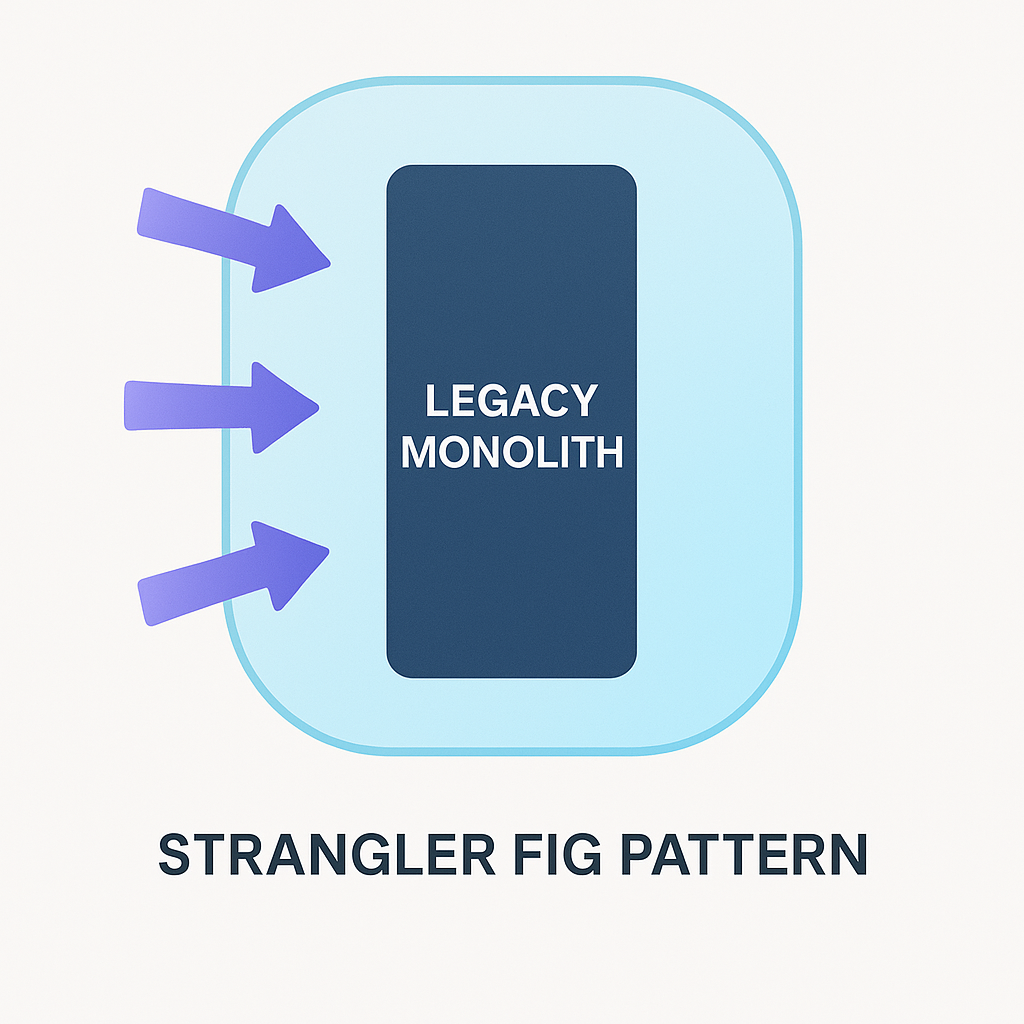
Strangler Fig Pattern
Surround the old portal with a modern “shell” that gradually replaces pieces of functionality until the legacy code shrivels away, following the ThoughtWorks Strangler Fig Pattern guide .
Must-Have Features for Modern Portals
Beyond core modernization, these capabilities differentiate market-leading portals.
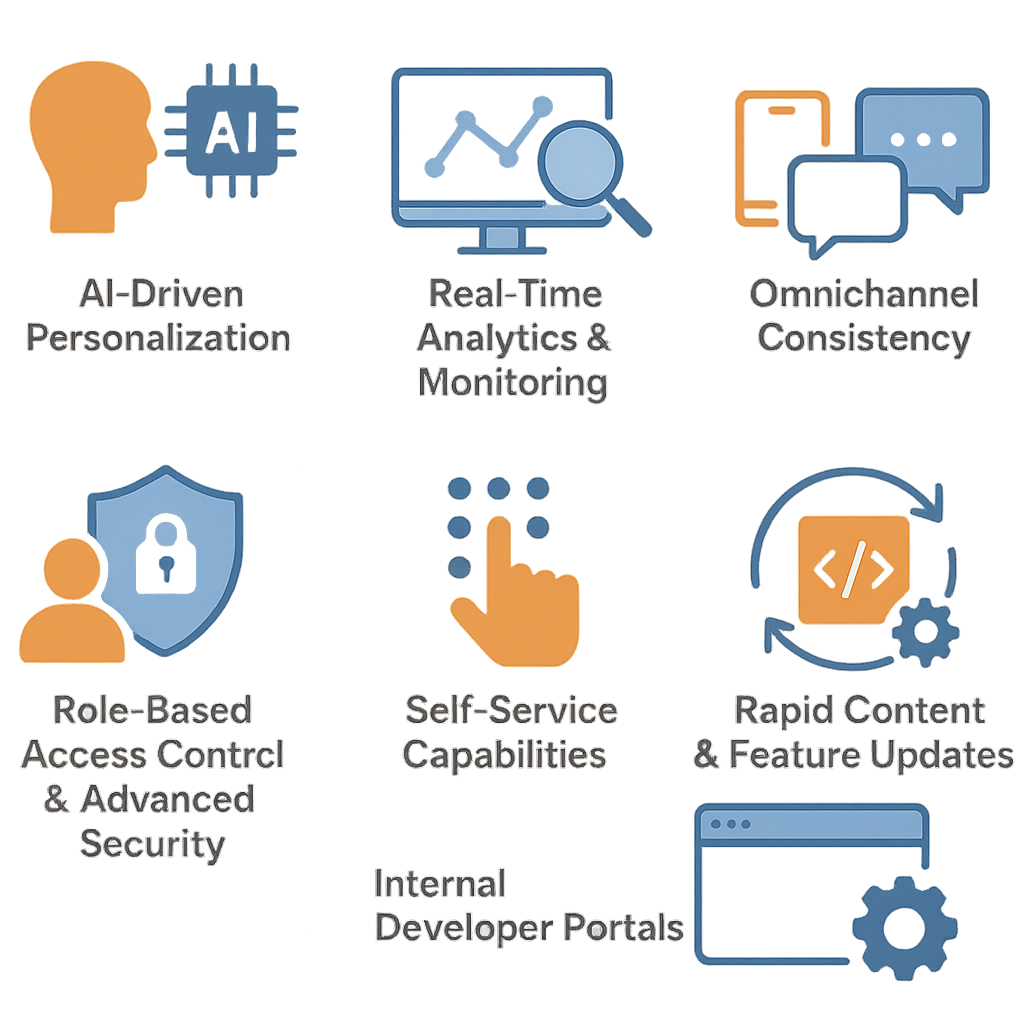
AI-Driven Personalization
Use machine learning to tailor dashboards, content and workflows to each user’s role and behavior. Forrester reports that personalized experiences can boost engagement by up to 20%. Forbes: AI-Powered Personalization
Real-Time Analytics and Monitoring
Embed live dashboards that track user interactions and system health. Instant insights help you optimize features on the fly and spot issues before they escalate. IBM Cloud: Real-Time Analytics
Omnichannel Consistency
Ensure seamless transitions across web, mobile, CRM and even email experiences. Customers and employees expect data continuity whether they switch devices or channels. Salesforce: Omnichannel Explained
Role-Based Access Control and Advanced Security
Implement coarse- and fine-grained permissions, audit logs, IP-tracking and multi-factor authentication. NIST guidance on RBAC is a great foundation.
Self-Service Capabilities
Empower users and developers to handle routine tasks—password resets, API key issuance or spinning up test environments—without helpdesk tickets, lowering support costs. Gartner: The Rise of Self-Service Portals
Rapid Content and Feature Updates
Adopt headless CMS or no-code/low-code backends so product managers and marketers can update copy, images or workflows without touching code. CIO: No-Code Development Platforms
Internal Developer Portals (IDPs)
Centralize catalogs of services, APIs and libraries to speed onboarding and enforce engineering standards. The CNCF IDP initiative offers best practices.
Preparing for Future Innovations
Your portal can become the launchpad for next-gen functionality.
AI Chatbots and Workflow Automation
Plug in conversational agents to guide users, automate approvals and surface knowledge-base articles in context.
IoT Integrations and Partner Ecosystems
Open APIs so connected devices and external partners can push or pull data, creating new use cases in manufacturing, healthcare or logistics.
Customization, Compliance, and Global Reach
Modern portals must reflect brand identity, support international audiences and adhere to regulations.
Customizable Branding and Multilingual Support
Offer theme editors for logos, colors and layouts. Store copy in translation platforms and detect locale automatically. Guidance on localization best practices is available from the W3C Internationalization Techniques .
Meeting Compliance Standards
In regulated industries, embed controls for GDPR, HIPAA, PCI DSS or other mandates. For example:
GDPR data subject requests and consent logging via GDPR Info
HIPAA access controls and audit trails in the HHS HIPAA Privacy Rule
The Modern Portal Advantage
You’ve seen why legacy portals drag teams down and how modern platforms overcome those limitations. By choosing flexible tech, phased migration patterns and introducing advanced features like AI personalization, real-time analytics and developer hubs, your next portal will not only solve today’s problems but scale into tomorrow’s opportunities. Start small, iterate often and let your portal become the hub for innovation, engagement and global growth.
:format(webp))
:format(webp))
:format(webp))