:format(webp))
:format(webp))
Complete Guide to Migrating from Vue.js to React in 2025
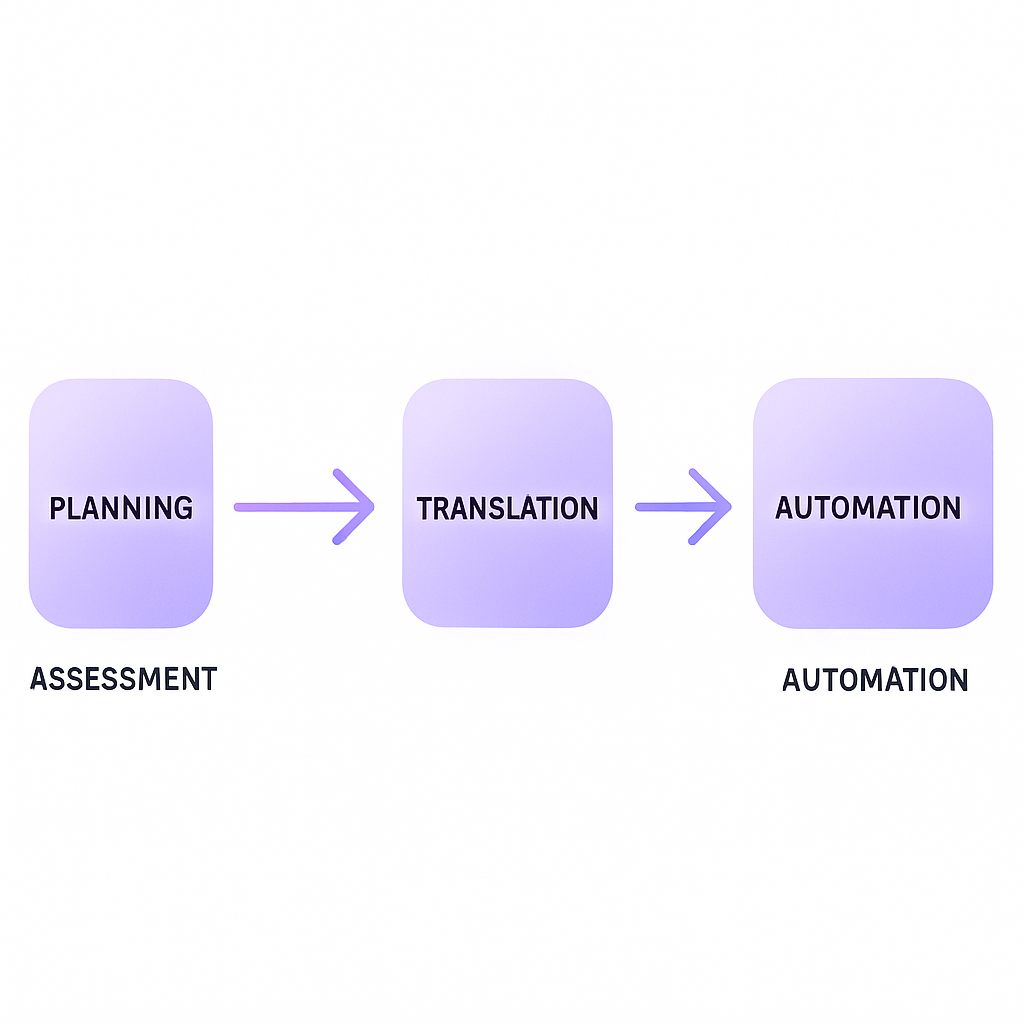
In this guide, you’ll discover why many teams are moving from Vue.js to React, how to assess your existing application, create a phased migration plan, translate key patterns, automate repetitive tasks, and ensure SEO, performance, and accessibility stay top-notch. By the end, you’ll have a clear roadmap to transition smoothly and leverage React’s modern features like server components and edge rendering .
Why Migrate from Vue.js to React in 2025
React remains the most widely adopted UI library, with 42% of respondents in the 2023 Stack Overflow Developer Survey reporting regular usage . Key drivers include:
A larger hiring pool
Long-term corporate backing and LTS guarantee
Advanced SSR/SSG and edge capabilities
Driver | Description |
|---|---|
Larger hiring pool | Larger React talent market |
Rich ecosystem | Next.js, Remix and plugins |
Corporate backing | Facebook/Meta long-term support |
SSR/SSG & edge | Built-in server and edge rendering |
Moving now positions your product to tap into these strengths and avoid mounting technical debt as Vue 3+ landscapes continue to shift.
Assessing Your Current Application
Before rewriting code, get a clear snapshot of your Vue.js app.
Technical Debt and Performance Bottlenecks
Audit dependencies, custom directives, and large monolithic components. Tools like Lighthouse help pinpoint slow bundles and render-blocking scripts.
SEO and Web Vitals Impact
If you use Nuxt.js for SSR, plan how Next.js or Remix will replicate features like Incremental Static Regeneration (ISR) and edge rendering to maintain your SEO and Core Web Vitals metrics.
Defining Your Migration Strategy
Choosing the right approach can make or break your timeline.
Incremental vs. Full Rewrite
Incremental: Embed React “islands” inside Vue via Module Federation or single-spa.
Full Rewrite: Start fresh in a new repo—better for major architecture shifts but riskier for deadlines.
Roadmap and Stakeholder Communication
Set clear milestones (e.g., component library launch, router migration).
Share progress via demo sprints and dashboards.
Allocate time for team training and documentation.
Choosing the Right React Stack
Not all React frameworks are equal for SSR, SSG, or edge patterns.
Next.js vs. Remix
Next.js offers a rich plugin ecosystem, incremental static regeneration, and built-in analytics.
Remix emphasizes nested routes and fine-grained caching at server boundaries.
Feature | Next.js | Remix |
|---|---|---|
Routing | File-based routing, less support for nested layouts | Emphasizes nested and dynamic routes, fine-grained control |
Data Fetching & Caching | Incremental Static Regeneration, flexible caching | Fine-grained, built-in caching at server boundaries |
Plugin Ecosystem | Rich plugin and integration ecosystem, large community | Fewer plugins, but growing ecosystem; more manual integrations |
Analytics & Monitoring | Built-in analytics and monitoring tools available | Relies on external integrations for analytics and monitoring |
SSR, SSG, and Edge Rendering
Both frameworks support static site generation, server rendering, and edge functions. Plan your deployment to Vercel, Netlify, or a self-hosted edge runtime.
Translating Vue Patterns to React
Bridging idioms is crucial for developer productivity.
Composition API → React Hooks
Vue’s `ref`, `reactive`, and `computed` map directly to React’s `useState`, `useReducer`, and `useMemo`. Turn reusable logic into custom hooks:
function useMousePosition() {
  const [pos, setPos] = useState({ x: 0, y: 0 });

  useEffect(() => {
    const update = e => setPos({ x: e.clientX, y: e.clientY });
    window.addEventListener('mousemove', update);
    return () => window.removeEventListener('mousemove', update);
  }, []);

  return pos;
}
State Management: Pinia → Zustand/Jotai
Instead of a 1:1 Vuex → Redux port, consider lightweight stores:
Zustand for minimal boilerplate
Jotai for fine-grained subscriptions
Store | Primary Use Case | Key Benefits |
|---|---|---|
Zustand | Simple global state | Minimal boilerplate |
Jotai | Fine-grained state slices | Granular subscriptions |
Routing, Forms, and Directives
Migrate `vue-router` patterns to React Router v6 nested routes.
Replace `v-model` with controlled inputs using React Hook Form .
Translate directives (`v-if`, `v-for`) into JSX conditionals and array `.map()`.
Automating Migration Tasks
Cut down manual edits with AST tooling and microfrontends.
Codemods & jscodeshift
Use jscodeshift scripts to change `.vue` SFC syntax to `.jsx/.tsx` and rewrite lifecycle hooks (e.g., `mounted` → `useEffect`).
Microfrontends with Module Federation
Embed React builds into your Vue shell (or vice versa) by sharing dependencies at runtime. This lets teams ship features independently and reduces merge conflicts.
Managing TypeScript & Tooling Alignment
TypeScript patterns vary between Vue and React.
Map `defineProps` and `emits` to React `Props` interfaces.
Adopt React 18’s `PropsWithChildren` and server component types.
Standardize ESLint with eslint-config-react-app and ensure strict mode flags align.
Ensuring Performance & Accessibility Parity
Guard against regressions during the rewrite.
React Profiling & Hydration Checks
Use React Profiler and flamegraphs in DevTools.
Automate hydration mismatch detection with synthetic monitoring tools.
Accessibility with ESLint Plugins
Install an ESLint plugin to catch focus, ARIA, and keyboard navigation issues early.
Post-Migration Testing & Deployment
A robust QA pipeline ensures stability.
Port unit tests from Vue Test Utils to React Testing Library .
Use Cypress or Playwright for end-to-end flows.
Set up CI/CD pipelines in GitHub Actions or GitLab with canary releases and rollback strategies.
Charting Your Path Forward
Migrating from Vue.js to React in 2025 is a major effort—but with a clear assessment, phased strategy, automated tooling, and focus on SEO, performance, and accessibility, you can minimize risk and unlock React’s modern features. Start small, learn as you go, and soon your team will harness hooks, server components, and edge rendering to delight users and streamline development.
:format(webp))
:format(webp))
:format(webp))