:format(webp))
:format(webp))
Convex vs. Firebase: Choosing Your Backend Strategy for 2026
Choosing a backend service is one of the most significant decisions you will make for your application architecture. If you select the wrong service, you face a future of complex migrations and rising technical debt, which can significantly hinder your product's time-to-market. By reading this guide, you will understand the fundamental differences between Firebase and Convex, how to manage data consistency, and how emerging technologies like AI agents and quantum-resistant security are reshaping the requirements for a modern cloud provider.
Data Consistency and ACID Guarantees
Firebase relies on Firestore, a NoSQL database that offers impressive global scale but often functions on a model of eventual consistency. This means when you update a document, other users might not see that change immediately, as Firestore’s distributed architecture prioritizes availability over immediate consistency in certain high-throughput scenarios. For collaborative tools or financial apps, this latency in data accuracy creates significant bugs that are often difficult to reproduce.
Convex solves this by providing comprehensive transaction support. Every transaction in Convex is built on ACID properties—Atomicity, Consistency, Isolation, and Durability—ensuring that every database operation is processed reliably. When you write data, it is guaranteed to be correct across your entire system instantly. This removes the risk of race conditions where two users attempt to modify the same piece of data at the same time, a common headache in traditional NoSQL environments.
Feature | Firebase (Firestore) | Convex |
|---|---|---|
Consistency | Eventual | Strong (ACID) |
Transactions | Limited/Document-level | Comprehensive/Global |
Data Integrity | Risk of race conditions | Guaranteed correctness |
Relationships | Manual nesting/fetches | Relational-style schema |
Relational Modeling in a Document World
While Firebase requires you to nest data or perform multiple client-side fetches to resolve relationships, Convex allows for a relational-style schema. You can define links between tables and query them with the same reliability as a traditional SQL database, but with the flexibility of JSON. This hybrid approach allows developers to maintain clean data structures without sacrificing the speed and agility typically associated with document-oriented storage.
TypeScript and the Developer Experience
The developer experience (DX) is often where these two platforms diverge most sharply. Firebase utilizes a proprietary language for its Security Rules, which you must write and maintain separately from your application code. This often leads to errors that are difficult to debug until they reach production.
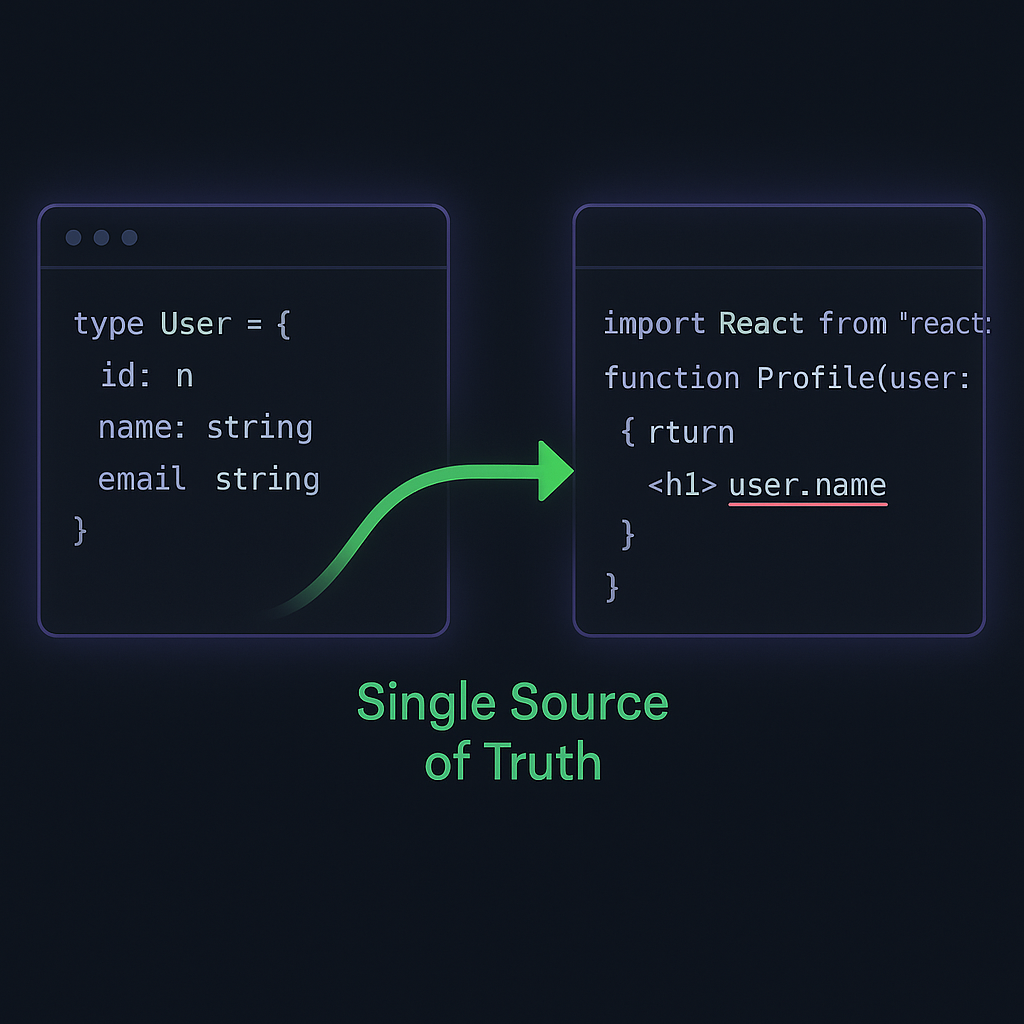
Convex approaches this by using TypeScript for everything. Your database schema, backend functions, and security logic are all written in the same language, providing end-to-end type safety. Research suggests that end-to-end type safety can reduce production bugs by catching errors during the development phase . If you change a field in your database, your frontend code will immediately show a red underline if that field is used incorrectly, ensuring your entire stack remains in sync.
Why DX Matters for Speed
No ORM Required: You query your data directly using TypeScript without needing complex libraries like Prisma.
Automatic Validation: Data is validated as it enters the database, preventing corrupt state and ensuring schema integrity.
Single Source of Truth: Your backend logic and frontend types stay in perfect sync automatically, reducing the overhead of manual API documentation.
Real-time Reactivity Without State Libraries
In a traditional Firebase setup, you have to manage listeners and manually sync your local state using tools like Redux or TanStack Query. If you fail to close a listener, your app will leak memory and consume unnecessary resources. This adds a layer of complexity to the frontend that often becomes brittle as the application grows.
Convex changes this by making every query reactive by default. When you use a Convex hook in your React component, it automatically subscribes to the data. If the database changes, the UI updates immediately. This eliminates the requirement for complex state management libraries in many applications. Furthermore, Convex functions avoid the "cold start" issues found in other serverless environments; cold starts in serverless functions can impact latency by over 1.5 seconds , causing noticeable lag for your users during initial interactions.
Metric | Firebase | Convex |
|---|---|---|
Reactivity | Manual listeners/Redux | Automatic hooks (useQuery) |
Cold Start Latency | Significant (~1.5s+) | Near Zero |
State Syncing | Brittle manual logic | Built-in reactive loop |
Complexity | High (requires extra libraries) | Low (framework-native) |
AI Integrations and the Component Ecosystem
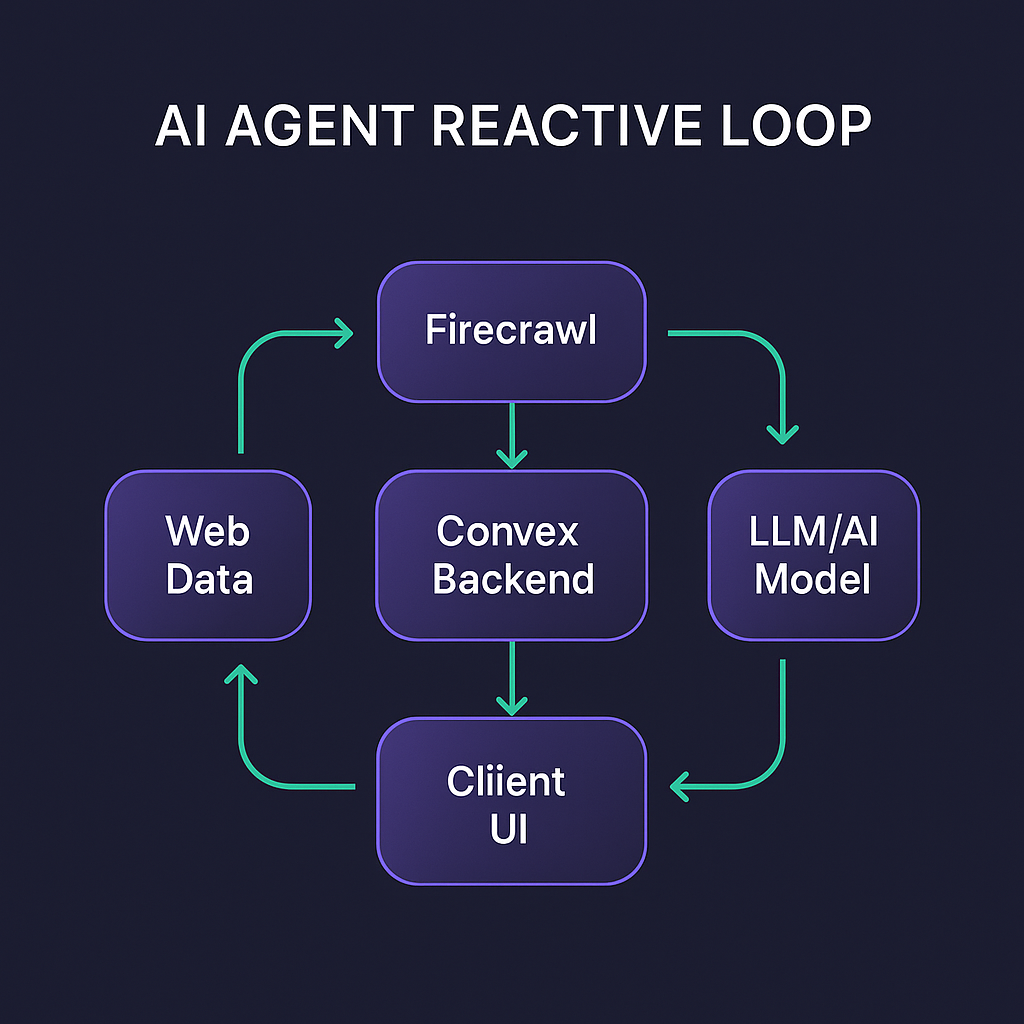
The requirements for backends are shifting as AI becomes a central part of development. Convex has introduced a component ecosystem specifically designed for AI agents. For example, by integrating with Firecrawl , you can perform reactive web scraping directly from your backend, enabling your app to ingest and process external data in real-time.
This allows your application to scrape data from the web, store it in a structured format, and use it to prompt an LLM—all within a single reactive loop. Firebase lacks this specific focus on durable caching for AI-driven data extraction, making it harder to build self-correcting AI agents that require current, high-fidelity information to function effectively.
Beyond the Google Cloud Garden
One of the biggest concerns with Firebase is vendor lock-in. Because it is a proprietary layer on top of Google Cloud, moving your app to another provider is a massive undertaking that involves rewriting significant portions of your backend logic. To mitigate these risks, many developers are looking toward cloud-native strategies that prioritize portability and open standards.
Through tools like Coolify , you can now manage your own infrastructure while retaining the Convex development workflow. Additionally, Convex is a major sponsor of open-source projects like TanStack . This sponsorship ensures that the broader developer ecosystem remains healthy and independent of any single cloud giant, fostering an environment where innovation isn't gated by a single vendor's roadmap.
Security in a Quantum Future
Security standards are evolving to meet the threat of future computing power. While most providers currently use standard encryption, Convex is integrating advanced cryptographic measures into its roadmap. Specifically, the NIST has recently finalized standards for quantum-resistant cryptography to protect against future threats. This advanced protection ensures that the data you store today remains secure even as quantum computers become capable of breaking current encryption methods.
Standard SSL/TLS for current transport security.
Identity-based access control using TypeScript logic for granular permissions.
Future-proofed protocols for long-term data integrity and protection against "harvest now, decrypt later" attacks.
Your Final Architecture Choice
If you are building a massive mobile application that requires deep integration with Google Analytics and AdMob, Firebase remains a strong contender. Its maturity and wide range of mobile-specific features are difficult to ignore for traditional app development where deep ecosystem integration is the primary goal.
However, if your goal is to build a modern web application with high levels of interactivity, AI features, and strict data requirements, Convex offers a superior path. It removes the friction of managing state and provides a type-safe environment that scales without the typical headaches of NoSQL databases. You are choosing more than a database; you are choosing how much time you want to spend fixing bugs versus shipping new features.
:format(webp))
:format(webp))
:format(webp))