:format(webp))
:format(webp))
Inside the Convex Engine: Building Reactive Backends Without the Friction
When you build a modern web application, you usually spend half your time syncing state between the database and the user interface, a process that frequently leads to architectural complexity and synchronization bugs. This blog post breaks down how Convex eliminates that manual labor through a reactive architecture, deterministic execution, and a unified storage layer. You will learn how the system handles real-time data flow, avoids serverless cold starts, and ensures data consistency without complex conflict resolution logic, allowing developers to focus more on business logic rather than infrastructure maintenance.
A Unified Stack for Data and Logic
Convex provides a transactional document store that combines the flexibility of JSON with relational features. Unlike traditional setups where you manage a separate database, API server, and cache, this platform integrates these components into a single environment. Your backend logic consists of queries, mutations, and actions written in TypeScript, which execute directly against the data, reducing the overhead of context switching between different tiers of the technology stack.
Unified Architecture vs. Traditional Decoupled Stacks
Component | Traditional Architecture | Convex Unified Stack |
|---|---|---|
Data Storage | Separate Database Instance (SQL/NoSQL) | Integrated Transactional Document Store |
API Layer | Standalone Server (Express/Go/Python) | Native TypeScript Queries & Mutations |
State Sync | Manual WebSocket/Polling Logic | Automatic Reactive Subscriptions |
Caching | External Cache (Redis/Memcached) | Built-in Reactive Cache |
Multi-Version Concurrency Control (MVCC)
To maintain performance during heavy traffic, the system utilizes Multi-version Concurrency Control (MVCC) to provide snapshot isolation. This architecture allows the database to provide a consistent view of the data. When you run a query, you see a consistent version of the data from the moment the query began, even if other users are writing to the database simultaneously. This prevents partial data reads and ensures that your UI remains stable, which is critical for maintaining a high-quality user experience during concurrent data updates.
The Reactive Engine and Subscription Logic
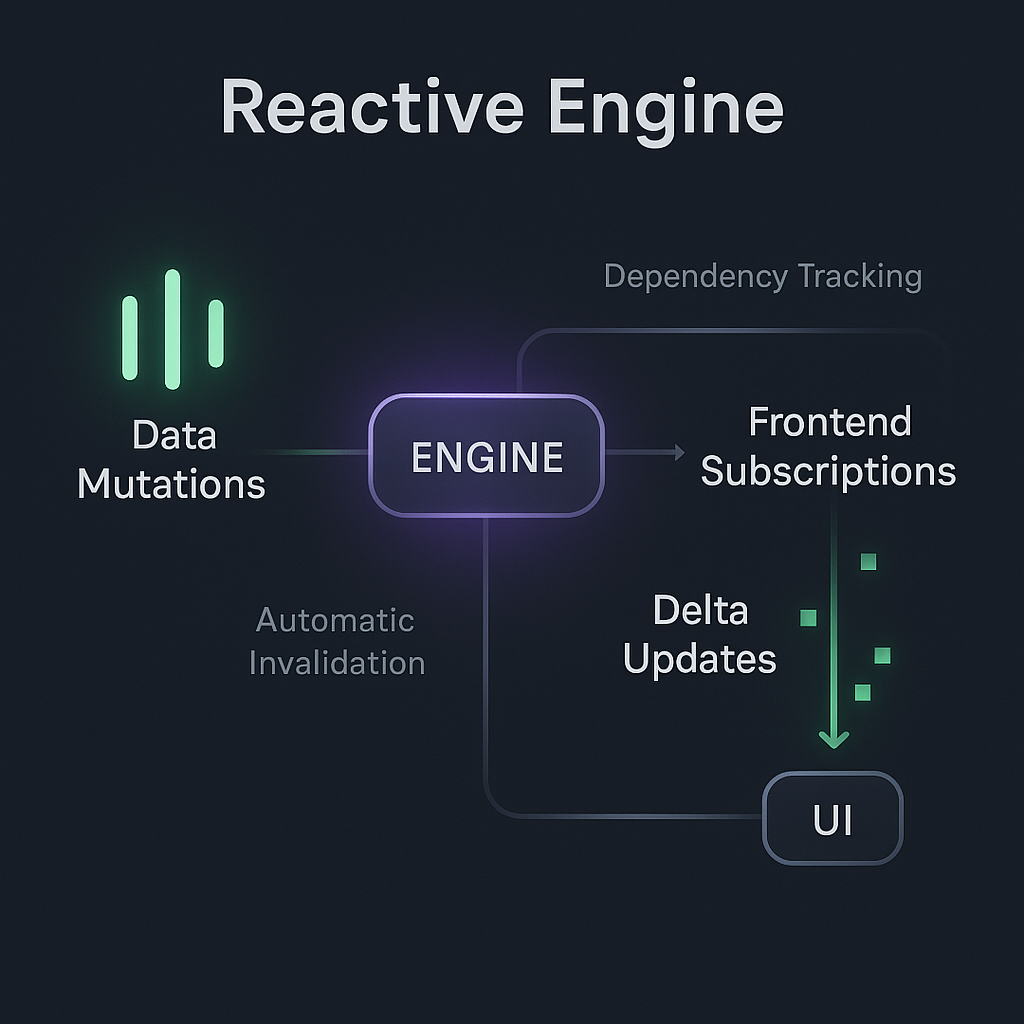
The core of the platform is a reactive engine that transforms the database from a passive storage bin into an active participant in the application lifecycle. Instead of your frontend asking "is there new data?", the backend notifies the frontend when relevant changes occur, following the principles of reactive programming where data streams propagate changes automatically .
Dependency Tracking: The engine automatically tracks which documents a query function reads during its execution.
Automatic Invalidation: If a mutation changes any of those documents, the engine marks the query as "dirty" and prepares a refresh.
Delta Updates: To save bandwidth and reduce latency, the server only sends the changed data (deltas) to the client rather than the entire dataset.
This model removes the requirement for complex state management libraries that often clutter frontend codebases.
Eliminating Cold Starts with V8 Isolates
Traditional serverless platforms like AWS Lambda often suffer from "cold starts," where the first request after a period of inactivity takes several seconds to process because a new container must be initialized. Convex bypasses this issue by using V8 isolates. These are lightweight instances of the V8 JavaScript engine that can share a single process while maintaining strict memory isolation.
According to performance benchmarks, V8 isolates can start in under 5 milliseconds, which is roughly 100 times faster than traditional cold starts. This speed allows the platform to maintain a pool of warm environments, ensuring your functions execute instantly regardless of how long they have been idle, significantly improving the responsiveness of real-time applications.
Serverless Execution Benchmarks | Startup Latency (Cold Start) | Resource Isolation |
|---|---|---|
Traditional Containers (e.g., AWS Lambda) | 500ms – 3,000ms+ | Full Container Virtualization |
Convex V8 Isolates | < 5ms | V8 Engine Sandbox Isolation |
Improvement | ~100x Faster | Extremely Lightweight Memory Footprint |
Deterministic Replay and Temporal Debugging
One of the most powerful features of this architecture is its deterministic execution environment. Every function runs in a sandbox where the results depend solely on the inputs and the state of the database, adhering to the standards of deterministic execution for reliable distributed systems .
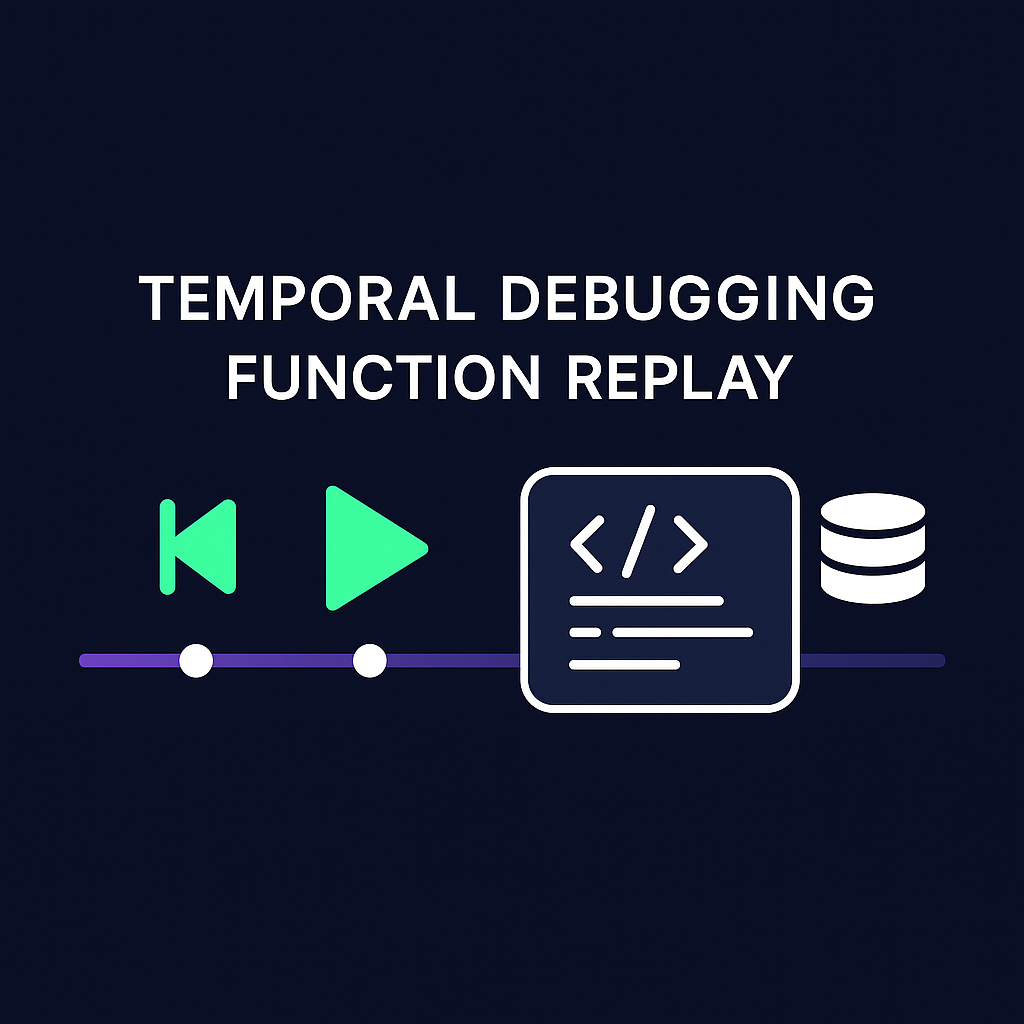
Function Replay: Because functions are deterministic, developers can replay a specific execution to see exactly why an error occurred under specific conditions.
Audit Trails: The system can reconstruct the state of the database at any point in time, providing a clear history of changes.
Point-in-Time Recovery: You can query historical states of documents using the MVCC system, which helps in recovering data from accidental deletions or debugging complex state changes over time.
Advanced Query Optimization and Backpressure
To keep the system responsive for millions of users, the platform employs advanced query optimization techniques. One such method is predicate pushdown, which moves filtering logic closer to the data source . This process ensures that only the data that matches your criteria is ever read from disk, drastically reducing I/O overhead and improving execution speed for large datasets.
When a client cannot keep up with the volume of updates being sent from the server, the system triggers backpressure handling. This mechanism manages the flow of data by:
Buffering updates on the server until the client is ready to process them.
Throttling the sync rate to prevent the client's browser from freezing due to message saturation.
Reconciling the state once the connection stabilizes to ensure the client reflects the most recent database version.
Security and Multi-Tenant Isolation
In a multi-tenant application, keeping one customer's data away from another is vital for privacy and regulatory compliance. Convex handles this through a built-in security model that integrates authentication directly with data access, ensuring that authorization is a core component of the data layer.
Global State Manager: This component coordinates transactions across the entire cloud environment to ensure ACID compliance for reliable database transactions .
Cross-Tenant Isolation: Each tenant's reactive subscriptions and function executions run in isolated environments. This ensures that a heavy load from one user does not impact the performance or availability of another, a common issue in shared database environments where "noisy neighbors" can degrade service quality.
The Future of Real-Time Development
Moving away from the traditional request-response cycle simplifies your development workflow and reduces the cognitive load of managing distributed state. You no longer have to worry about cache invalidation or manually updating the UI when data changes on the server. By merging the database, serverless functions, and a reactive sync engine into one coherent system, you can focus on building features rather than managing infrastructure. This architectural shift ensures that your application remains fast, consistent, and scalable as your user base grows, providing a foundation for the next generation of interactive web experiences.
:format(webp))
:format(webp))
:format(webp))